
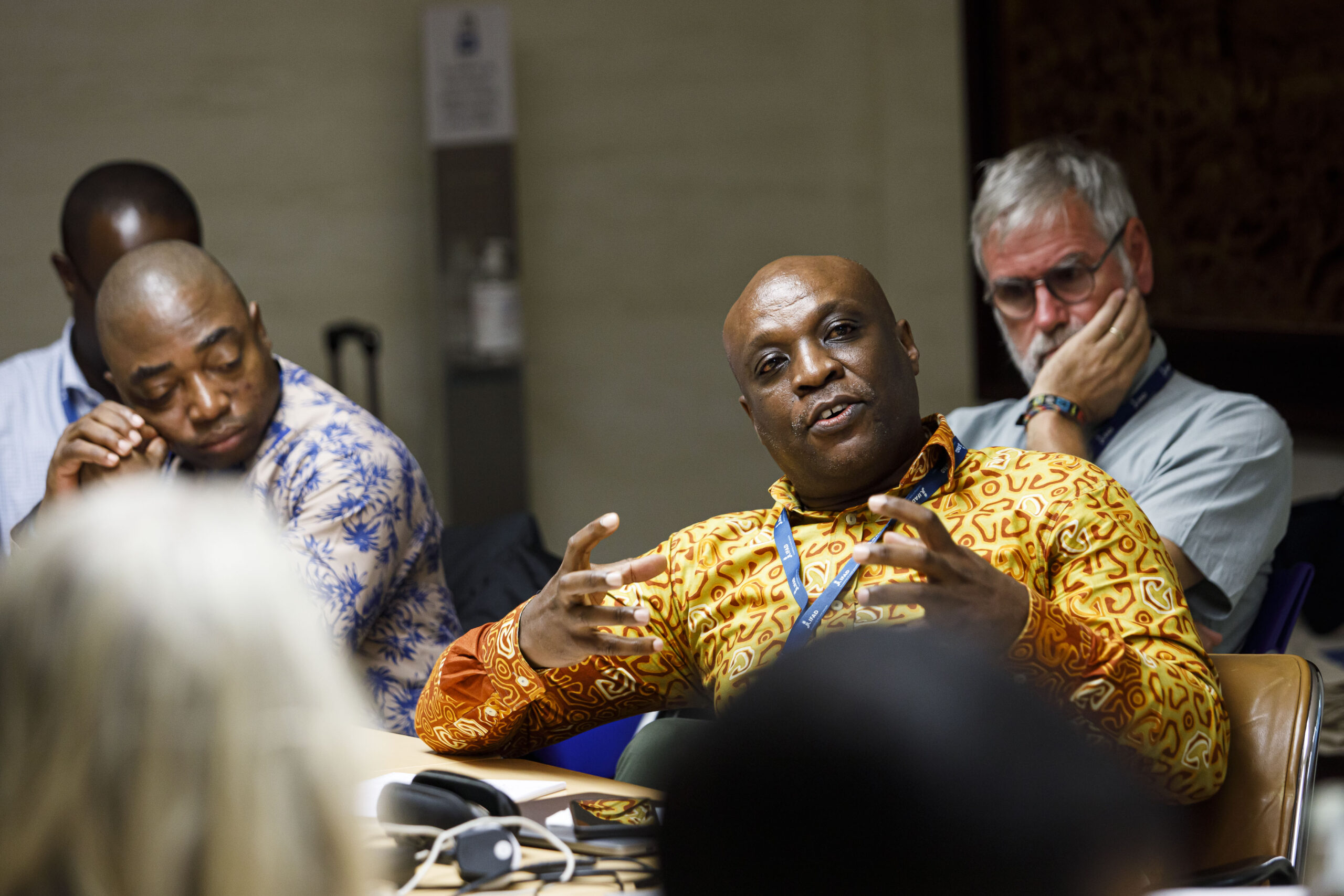




Beyond Regulation Sustainable BDSP Associations
Day 1 – Topic 2
Speakers

Edmond Ringo
Managing Partner,
Matchmaker Associates Ltd

Olfunmi Adepoju
Chief Investment Officer,
PearlBridge Capital Managers
Session Replay
https://youtu.be/sINyHCN3HEQ
Session Overview
It is clear that Government plays a critical enabling role where they can jumpstart processes, but BDS markets cannot be solved by Government alone.
The next session examined Beyond Regulation: BDS Associations. The mismatch between SME demand and BDS supply were highlighted and that poor governance of the BDS market results in a lack of credibility, especially in the Agriculture sector. Emerging initiatives in West Africa were presented as sources for inspiration, such as Impact Investing ESO initiatives in Ghana and Nigeria, which are using the SCALE approach to improve quality. The session concluded with the proposition of a demand driven three-pillar approach which expands the pool of high quality BDS providers:
1. Professional organizations with self-governance and peer review
2. Certification systems building from EAC and Uganda standards: NWIP BDS Internal Capacity and NWIP BDS Service Delivery
3. Tiered categorization with higher-tier providers mentoring lower-tier ones
“Imagine if you need heart surgery,
but there is no way to know if your
surgeon was qualified. That’s exactly
what the situation facing millions of agribusinesses across Africa when they seek BDS services.”Edmond Ringo
Break Out Group Discussion
The Trust Crisis We Face
We’re confronting a governance crisis that’s crippling BDSPs across Africa. Donors can’t distinguish qualified from unqualified providers, creating monopolistic advantages for a few while marginalising the majority. Meanwhile, inconsistent quality standards are eroding confidence throughout the entire sector, directly harming our agriculture-dependent economies.
The fragmentation is stark: Tanzania’s BDS Society battles financial constraints, Kenya’s ASEK focuses too narrowly on startups, Uganda’s networks remain informal and closed, and other East African states lack organised initiatives entirely.
Our Three-Pillar Solution Framework
- First: Self-Governance as Foundation. Regulation alone won’t solve this. We need professionals taking ownership through peer reviews, self-assessments, and internal audits—exactly what’s working in West Africa’s success stories.
- Second: Credible Certification Systems. Learning from the accreditation and certification framework study by AMEA in Uganda, we need to nurture unified national and regional BDS associations with a mandate to register and regulate BDSPs based on rigorous, standardised metrics. This includes mandatory continuous professional development (CPD), recertification processes, and peer learning networks that drive innovation.
- Third: Quality Assurance with Tier Categorisation. High-tier BDSPs could coach and mentor lower-tier providers, creating transparent assessment criteria and accountability mechanisms. Most critically, we should shift from supply-side thinking to a demand-side focus, putting farmers, agri-SMEs, and farmer organisations at the centre of BDS program design.
The Transformation WE will Achieve
Immediate Benefits
Development partners will finally identify trustworthy BDSPs with confidence and achieve measurable returns on investments instead of gambling with program funds.
BDSPs at different tiers will gain enhanced credibility and clear career advancement pathways.
Economic Impact
We’re talking about increased agricultural productivity, stronger SME sectors driving growth, enhanced access to finance, and improved competitiveness in regional and global markets.
The momentum is already building: EAC/UNBS/PSFU in establishing BDS standards, AMEA ISO 18716 initiative is gaining traction, and Tanzania and Uganda BDS guidelines are the right stepping stones. We have AMEA networks in Kenya and Rwanda – we need to engage with these networks.
Call to Action
The path forward demands embracing self-governance, unified certification systems, and continuous collaboration.
We cannot afford to continue operating without proper governance mechanisms. The time for action is now.
Resources
All Sessions
Day 1
- D1OS – National BDS Accreditation Frameworks
- D1T1 – Government Led BDS Quality Assurance
- D1T2 – Beyond Regulation Sustainable BDSP Associations
- D1T3 – Local Market BDS Development
- D1T4 – Developing Service Coalitions
Day 2
- D2OS – The Business Case For Data Systems
- D2T1 – Segmenting and Tailoring BDS for the SME market
- D2T2 – Scaling Agri-BDS in the Ethiopian Barley Value Chain
- D2T3 – Digital/Blended service delivery – is it delivering more for less?
- D2T4 – Gender business transformation models
- D2CS – Future Learning & Toolbox