
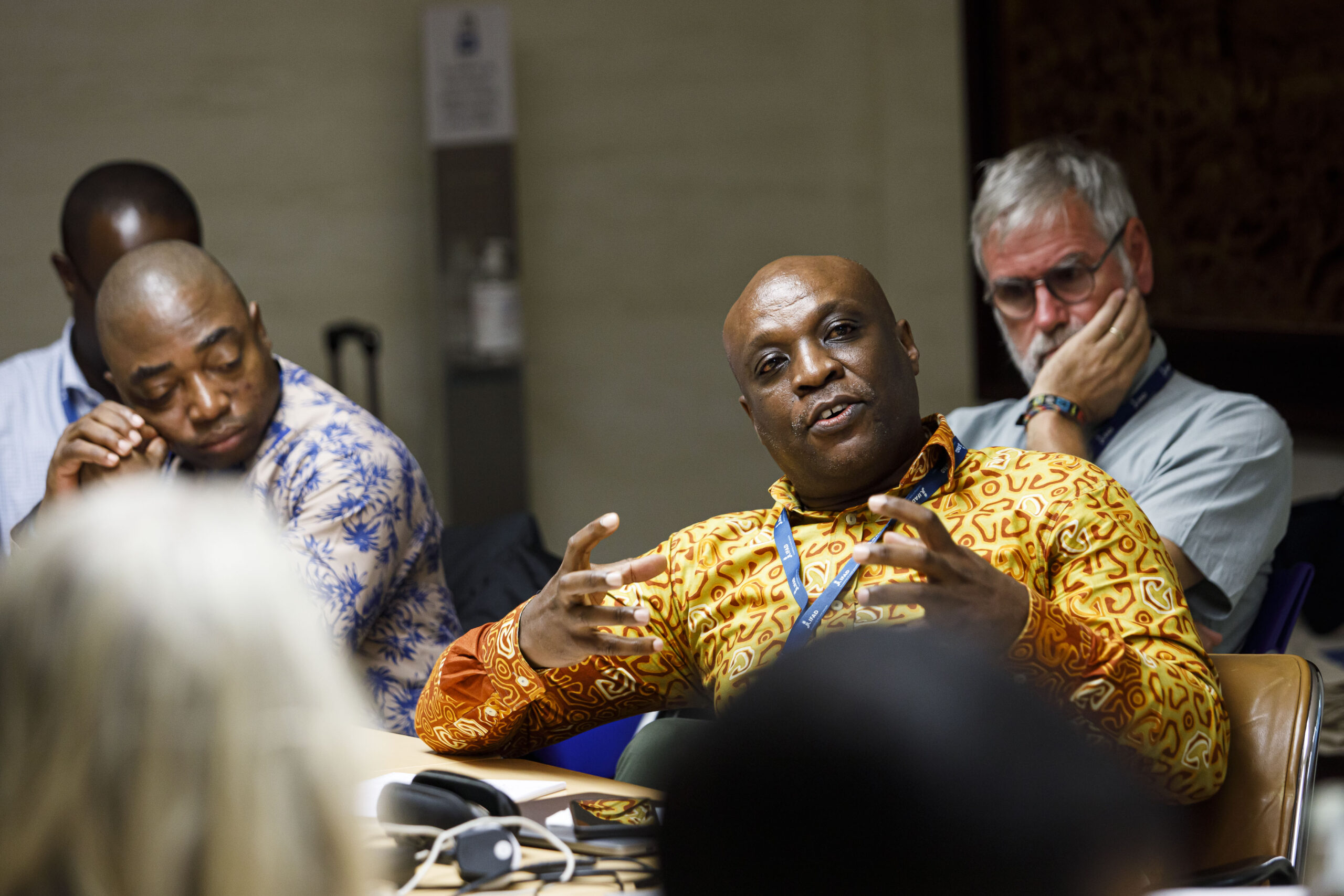




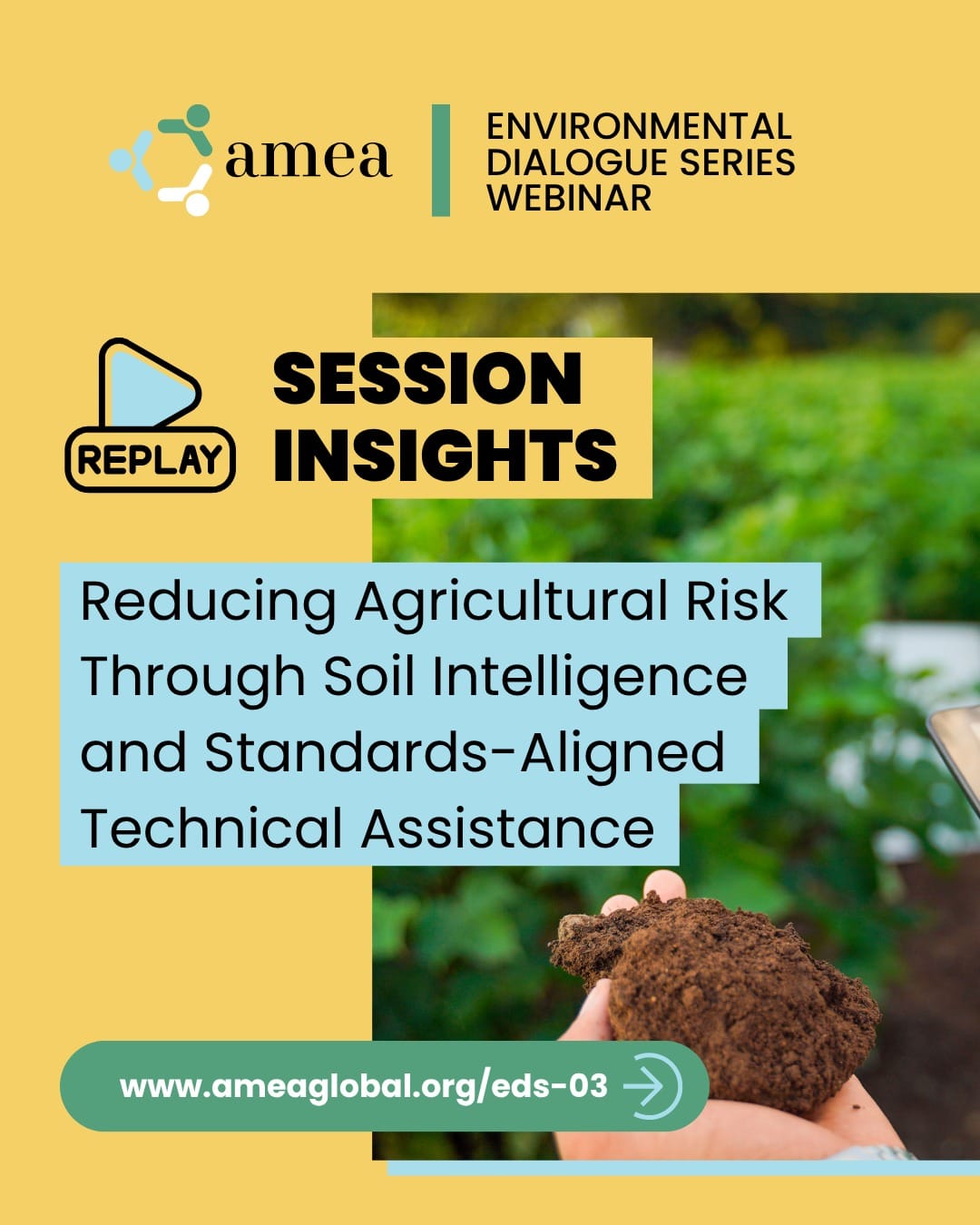
Soil health is fast becoming the foundation of smart agricultural investment.
In AMEA's latest Environmental Dialogue Series webinar, Reducing Agricultural Risk Through Soil Intelligence and Standards-Aligned Technical Assistance, we brought together Tom Cadogan and Peter Moss of Farm Africa, alongside facilitator Casey Harrison of Nuru and AMEA, to explore how soil data and standards-aligned advisory services are transforming risk management for smallholder farmers. The conversation tackled a question that funders, financial institutions, and farmer organizations are all asking: how do we turn soil intelligence into measurable, bankable outcomes?
If you missed the live session, the replay and key takeaways are below.
Watch Replay
Key Insights

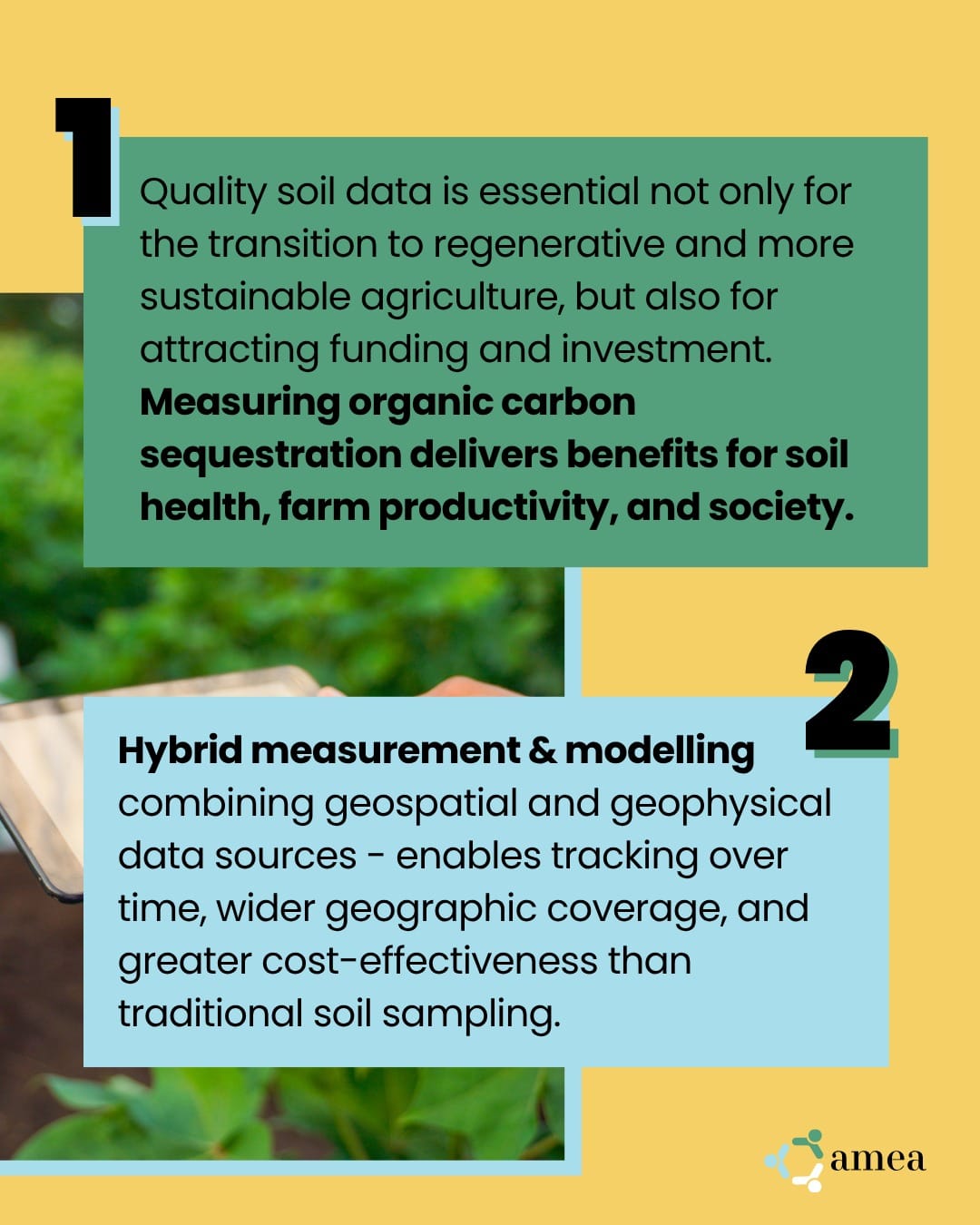
Quality soil data is essential not only for the transition to regenerative and more sustainable agriculture, but also for attracting funding and investment. Measuring organic carbon sequestration delivers benefits for soil health, farm productivity, and society.
Hybrid measurement and modelling — combining geospatial and geophysical data sources — enables tracking over time, wider geographic coverage, and greater cost-effectiveness than traditional soil sampling.
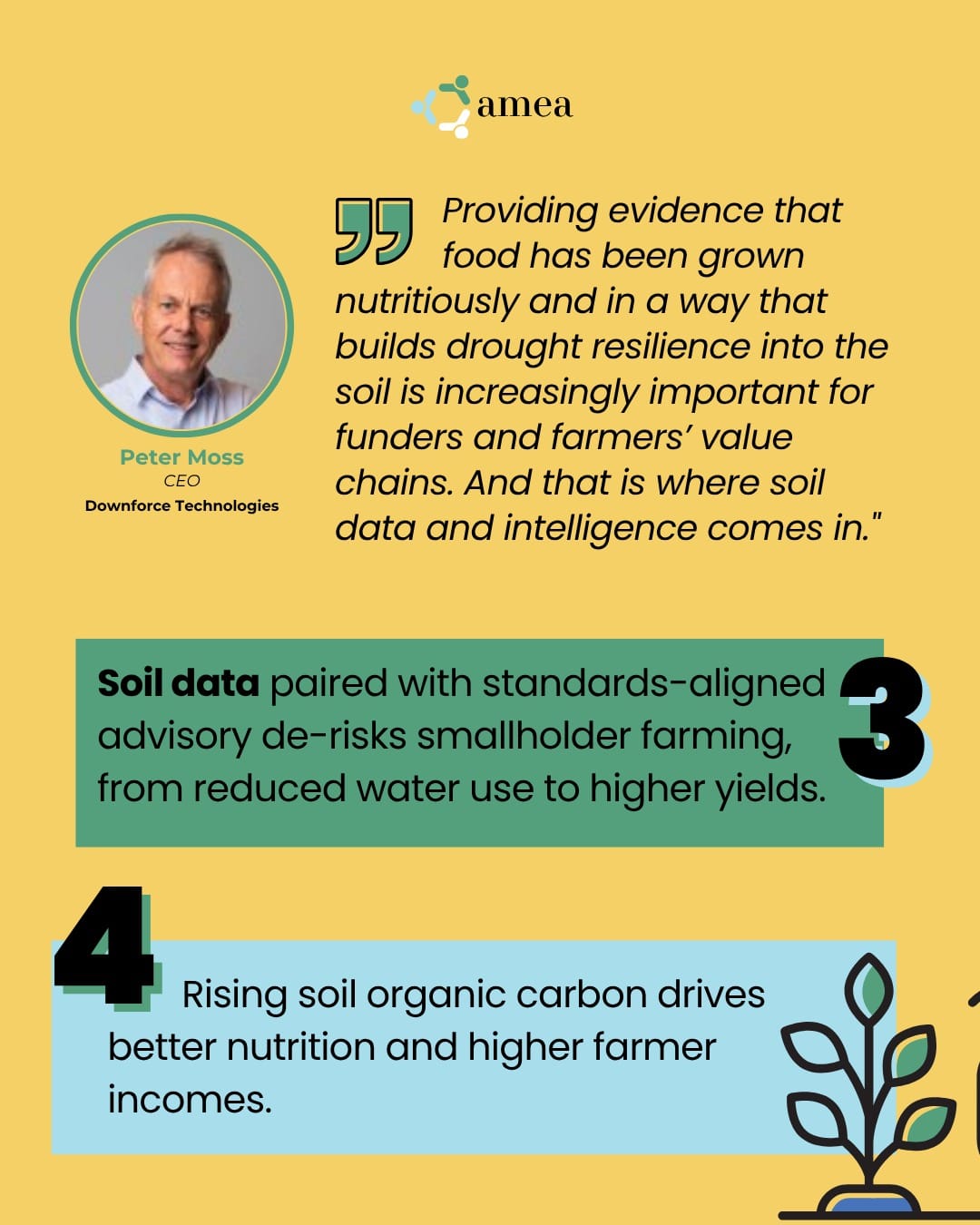
Soil data paired with standards-aligned advisory de-risks smallholder farming, from reduced water use to higher yields.
Rising soil organic carbon drives better nutrition and higher farmer incomes.
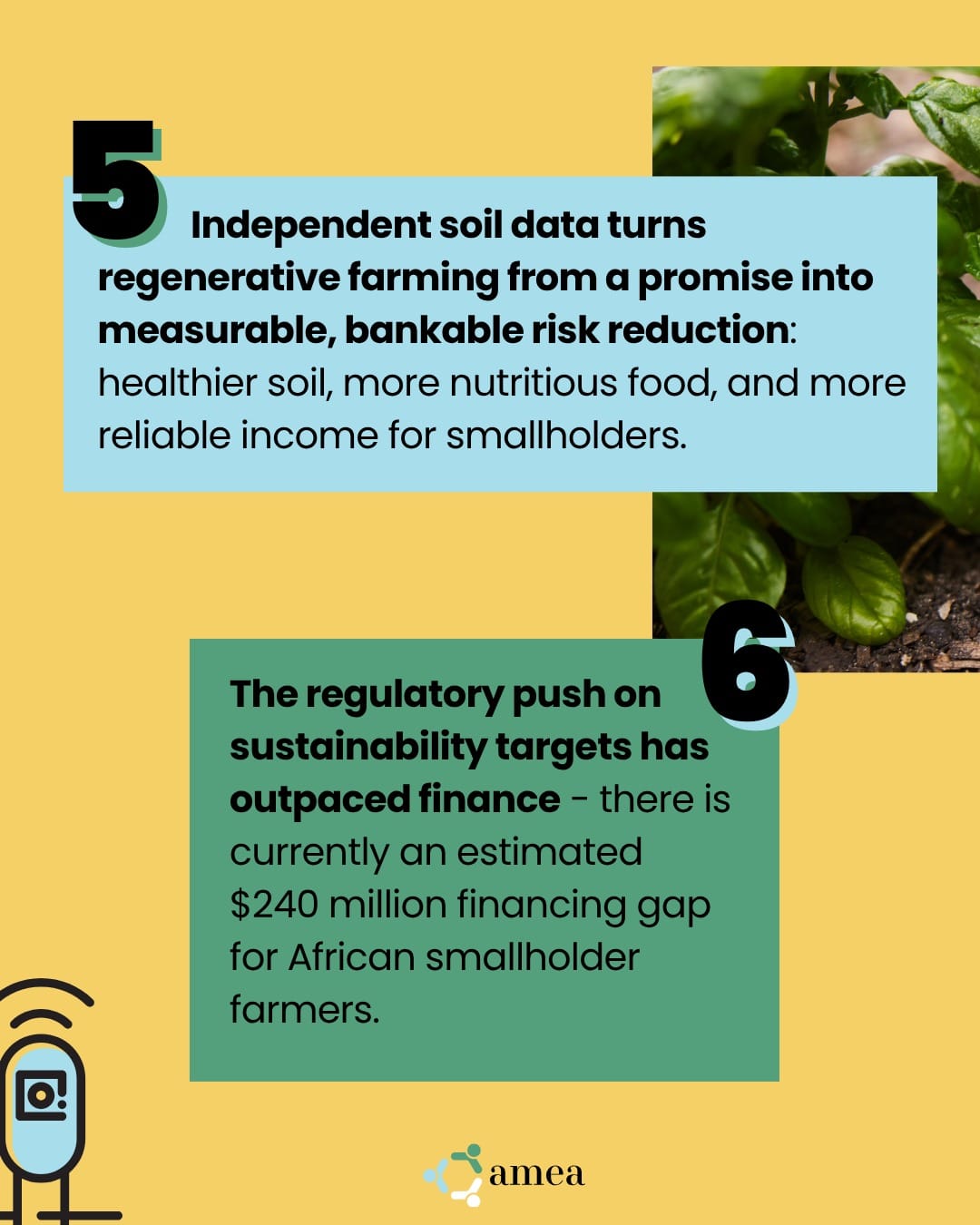
Independent soil data turns regenerative farming from a promise into measurable, bankable risk reduction: healthier soil, more nutritious food, and more reliable income for smallholders.
Le regulatory push on sustainability targets has outpaced finance — there is currently an estimated $240 million financing gap for African smallholder farmers.
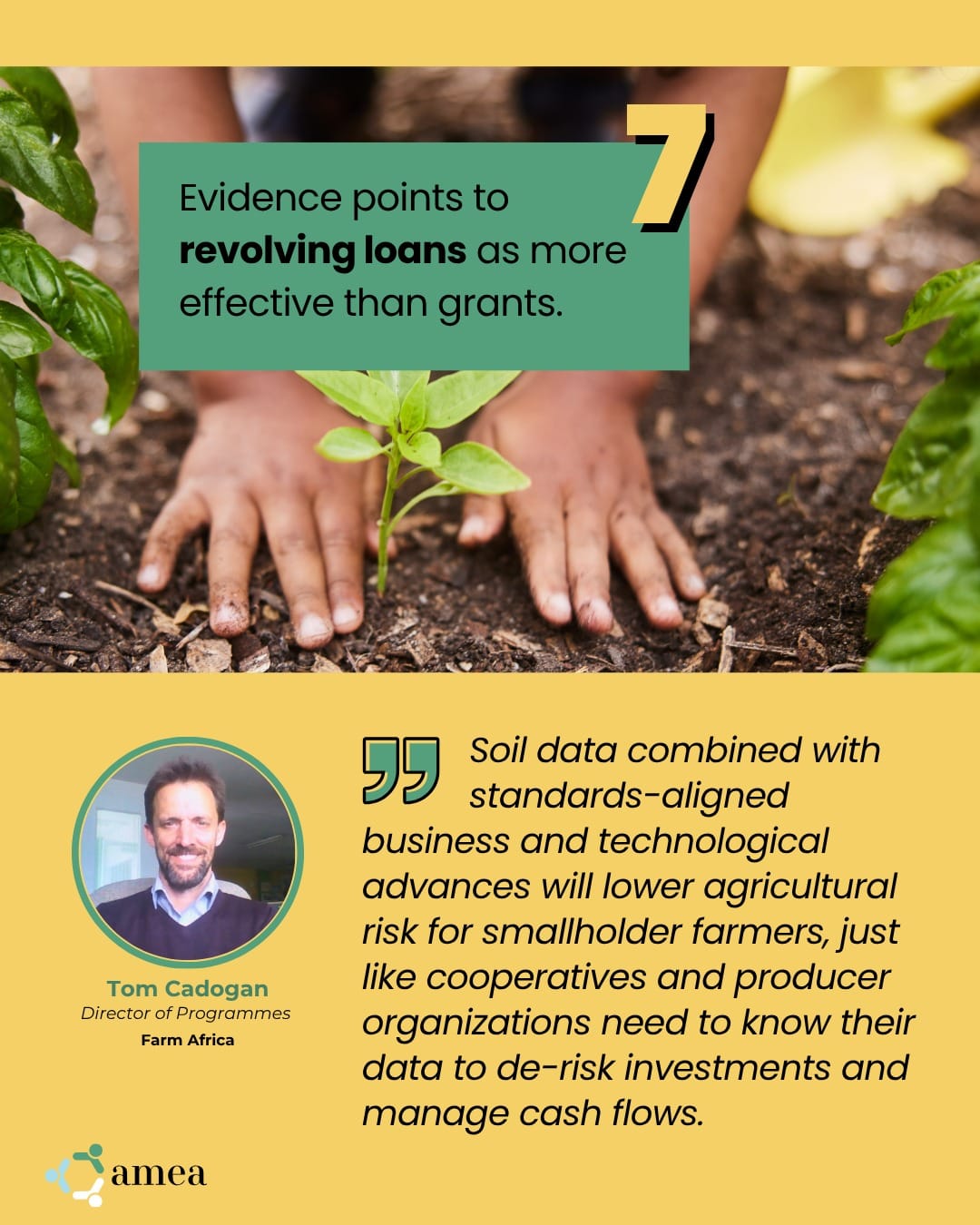
Evidence points to revolving loans as more effective than grants.
The financial sector — banking, insurance, and beyond — is already demonstrating willingness to pay for soil data, and embedding soil intelligence into financial decision-making will be increasingly important.
Agri-extension services and networks play a critical role in demonstrating regenerative agriculture in practice: higher yields, lower fertilizer inputs, and more sustainable financing for agri-SMEs.
Highlights
Get Involved!
Our next event in this series will in in August - sign up below to join the updates list for the Environmental Working Group.
The insights from this session underscore a clear message: independent soil data, paired with the right technical assistance, is reshaping how we assess and reduce agricultural risk, benefiting farmers, funders, and the systems that connect them.
If this conversation resonated with you, AMEA's Environmental Working Group is where these ideas move from dialogue into action. The group brings together members and partners working at the intersection of environmental data, standards, and farmer livelihoods, sharing tools, evidence, and approaches that strengthen the business case for regenerative agriculture.
Join the Environmental Working Group to help shape the next generation of climate-aligned BDS ecosystems.