
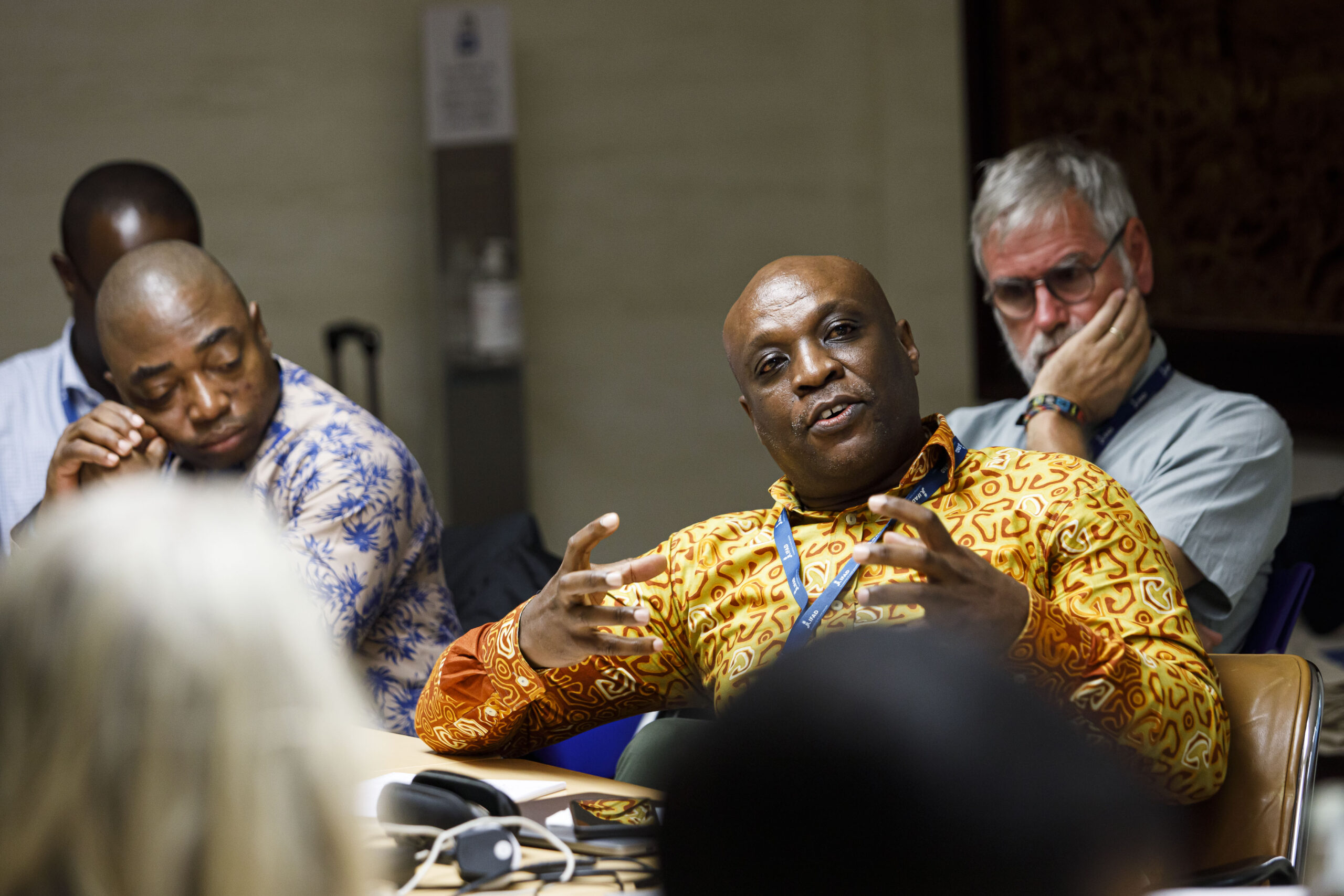




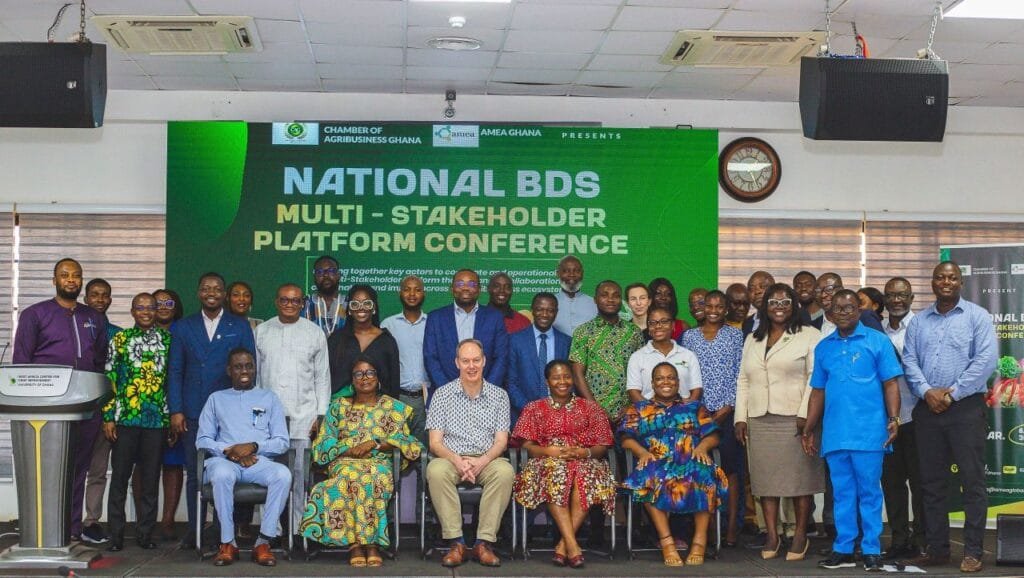
On 12th March 2026, forty-five representatives from government, financial institutions, cooperatives, and business development service (BDS) providers came together at the West Africa Centre for Crop Improvement (WACCI) for Ghana's first National BDS Multi-Stakeholder Platform Conference. Hosted by the Chamber of Agribusiness Ghana and AMEA, the event marked a decisive step towards a more coordinated, accountable BDS ecosystem for the country's agri-SMEs.
Why Ghana Needs a Coordinated Platform
Anthony Morrison, CEO of the Chamber of Agribusiness Ghana, opened the conference by naming the challenges undermining the BDS market: the absence of clear guidelines on service fees, which leaves room for overcharging; SMEs being defrauded when consultants are paid but fail to deliver; and conflicts of interest where BDS providers move from advisory roles into implementation without proper safeguards.
These issues have eroded trust between service providers, government agencies, and development partners. Morrison called for a national standard for BDS, similar to the standards already being developed for farmer groups under the Ghana Standards Authority, to bring ecosystem players under a coordinated, regulated framework.
Global Lessons, Local Opportunity
Mark Blackett, AMEA's Network and Technical Director, shared AMEA's experience building BDS multi-stakeholder platforms (MSPs) across eight African countries since 2016, including Tanzania, Uganda, Benin, and Ethiopia. Each country's MSP has evolved differently: Tanzania's led to a National BDS Roadmap to 2030 under the Office of the Prime Minister, while Uganda's Ministry of Finance, Planning and Economic Development is preparing to launch a new BDS Association and BDS Standards. Across these markets, AMEA's peer-reviewed toolbox has now reached over two million farmers.
Blackett also outlined what recent ISF Advisors research identifies as a mature BDS ecosystem: market-driven and demand-led, informed by shared data, coordinated to reduce fragmentation, supported by government as an enabler rather than a controller, and financed through sustainable models that go beyond short donor cycles. With 95% of BDS in African countries still delivered through subsidised projects, he pointed to a Uganda cost-share pilot as proof that SMEs will contribute to costs when arrangements are designed well.
Framing Ghana's opportunity through network theory, participants were asked to consider whether the country now has the shared purpose, the right people, and the momentum to succeed where an earlier attempt, stalled since 2023, had not.
Shaping the Way Forward
The plenary discussion surfaced several priorities for Ghana's platform. Participants welcomed the Ghana Enterprise Agency's (GEA) expanding mandate to include agribusiness and its ongoing role strengthening service delivery through the Business Resource Centres, while also raising concerns about the recurring politicisation of government support agencies and the disruption this causes to programme continuity.
A financial sector representative called for supply-side actors, including the Bank of Ghana, to be formally engaged in future sessions, noting that BDS policy discussions have tended to focus on demand-side issues alone. Participants also agreed that cooperatives are well placed to deliver BDS directly to their members, offering a cost-effective route to reaching agribusinesses at the grassroots level, and identified stakeholder mapping as the first concrete step needed to reduce duplication and silo working across the ecosystem.
The Chamber of Agribusiness Ghana also introduced the Ghana Agribusiness Directory, a USAID-supported digital platform with registration, pricing, and validation features, as a potential operational backbone for the new platform.
Concrete Next Steps
The conference closed with a clear set of commitments:
- A Steering Committee has been formed, drawing members from GIMPA, Downforce Technologies, the Ghana Chamber of Young Entrepreneurs, the Inclusive Business Center, the Ministry of Food & Agriculture, the Ministry of Finance, CSIR-Institute of Industrial Research, and WARC, with further participants expected from the Ghana Enterprise Agency, MoTAI, Rikolto, and Solidaridad. The Committee will meet before 30th April to establish its ways of working and set up two Working Groups.
- Stakeholder mapping to identify BDS ecosystem players will be finalised by 31st May.
- BDS guidelines and standards, aligned with the precedent set by ISO 18716, will have first drafts ready by 30th June.
- An Agri-MSME Finance Working Group will develop a specific plan for financial sector coordination and climate finance opportunities by 30th June.
- A proposition for a Youth in Agribusiness Working Group will also be developed by 30th June.
Participants closed the day by signing a Commitment Board, a symbolic pledge to the platform process, and voiced the ambition of hosting AMEA's international convening in Ghana in 2027, contingent on the platform demonstrating measurable progress.
If you would like to join Ghana's effort to transform the way BDS supports agri-enterprises, contact Kennedy at ghana@ameaglobal.org.