
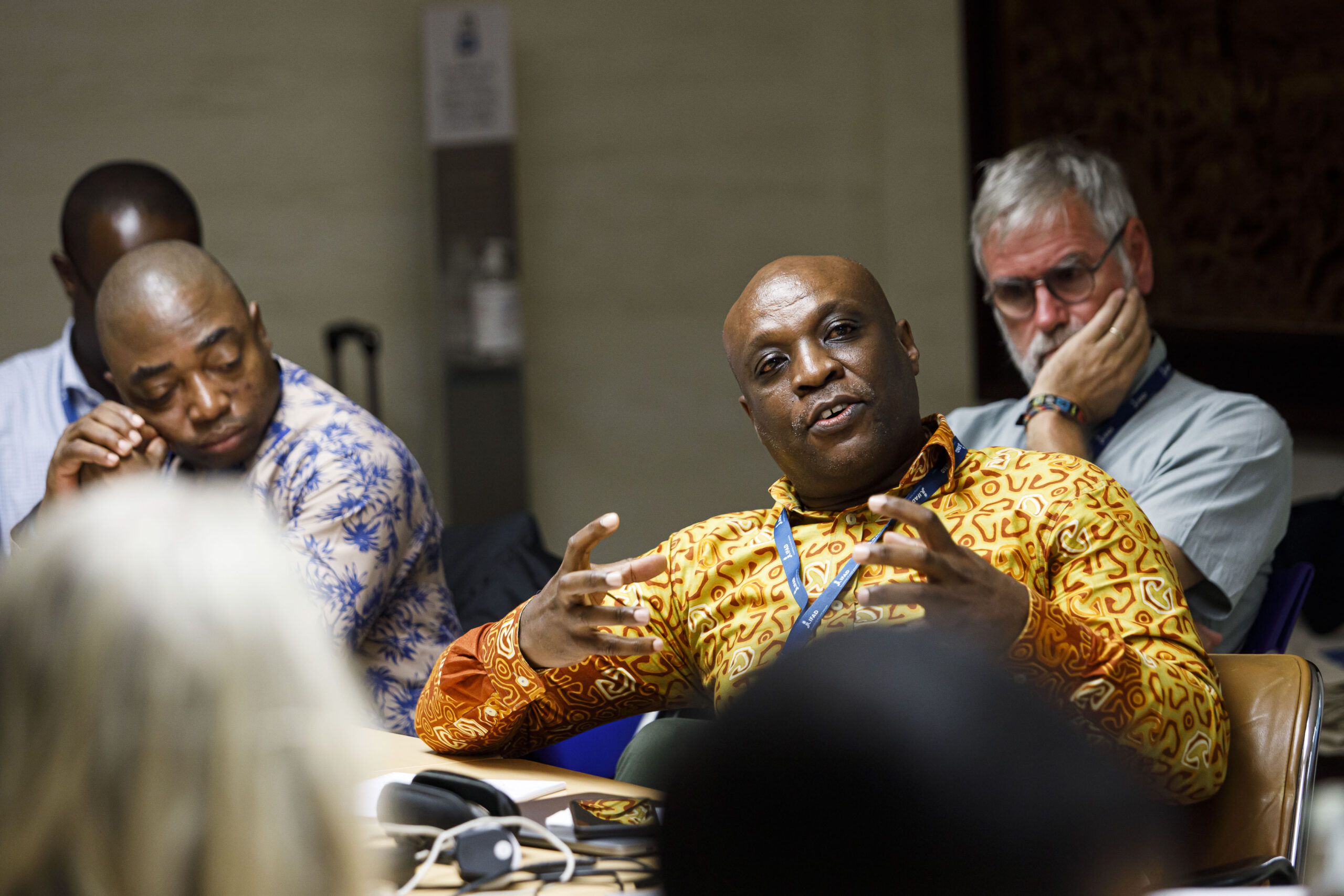





On 6 and 7 October 2026, more than 60 AMEA members and partners came together in Kampala, Uganda, for our Global Convening. The theme was Sustainable Food Systems through BDS Market Transformation, and the question at the centre of two days of discussion was a practical one: how can investment in food systems lead to stronger agri-enterprises, more resilient farmers and lasting impact?
The Convening also marked a milestone. AMEA is ten years old, and Kampala gave us the chance to celebrate how far the network has come and to agree where it goes next.
The key message: execution is the challenge
Uganda has made real progress in food systems policy, agricultural finance, digitalisation and BDS standards. A National BDS Framework is in place, two national BDS standards have been approved, and United Business Support Professionals (UBSP) will act as the certifying body for BDS providers.
The recurring challenge is execution. Strategies, standards and coordination structures exist, but funding, delivery and local-level functionality remain uneven. The task now is to translate frameworks into coordinated, investable and measurable interventions that improve enterprise performance, farmer livelihoods, nutrition, resilience and access to markets.
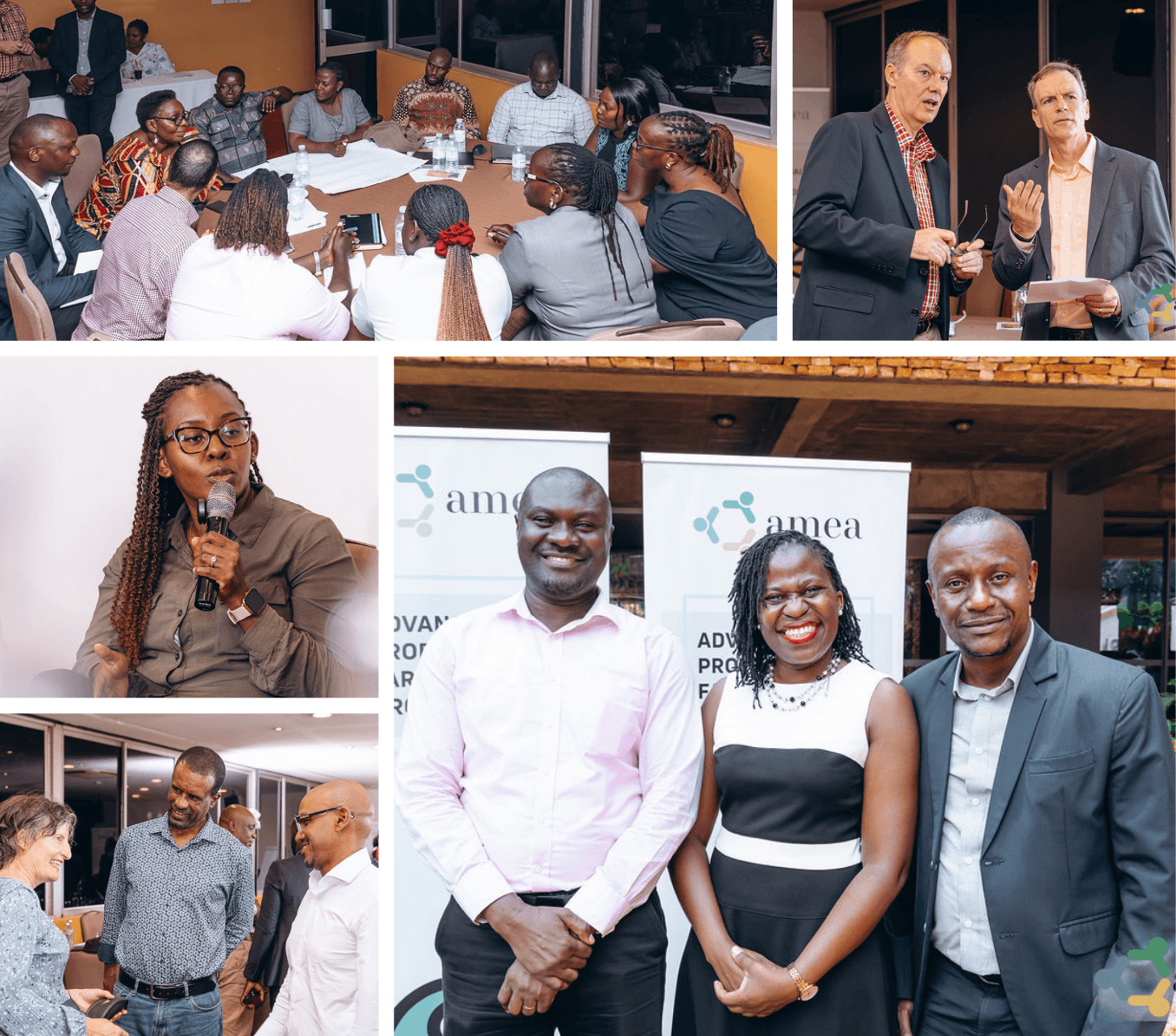
Three key takeaways
1. Food systems transformation is an execution challenge
Transforming food systems from farm to fork requires an ecosystem approach. Policy, finance, technology, BDS markets, nutrition and environmental resilience must operate as one connected system. Panellists called for coordinated investment across the full value chain rather than funding isolated components, and for success to be measured through availability, affordability, nutrition, safety and livelihood outcomes, not production alone.
2. Agri-SMEs are engines of change, and tailored BDS is a must
Agri-SMEs and organised producer groups are central delivery vehicles. Stronger farmer organisations, cooperatives and anchor enterprises connect production, finance, services and markets. To support them, BDS must move from activity-based delivery to tailored packages that solve the specific bottlenecks of the enterprise segments being served.
Agri-enterprise leaders shared clear examples. Diagnostic support helped Mountain Harvest refine its sourcing, pricing and leadership succession. Afrikai sharpened its business identity and product strategy. Curated Holdings improved the processes needed for certification to reach EU and UK markets. The lesson was consistent: enterprises will pay for, or co-finance, services that create lasting value. BDS markets must become genuine marketplaces where success is measured by clients' revenue, resilience, competitiveness and repeat business.
3. Financing food systems: the right capital for the right business
Agricultural finance remains constrained by risk perception, weak data, informality and unsuitable products. Impact investors and lenders agreed that coordinated finance and technical assistance can significantly improve bankability, and that climate performance becomes financially relevant when adaptation reduces volatility and strengthens repayment capacity.
Segmentation emerged as a powerful idea throughout the Convening. Different value chains, business models and stages of growth need different solutions. Better segmentation helps match financing, risk appetite and BDS to the right businesses at the right time, building stronger pipelines of investment-ready agri-SMEs. There are real opportunities to work smarter, share learning and become more efficient through collaboration.
With sustainable food systems transformation estimated to require at least USD 680 billion a year globally, and declining official development assistance, participants stressed the need to move from fragmented financing to coalition-based financing, and to define return on investment by outcomes for food systems, enterprises and farmers, not simply capital deployed.

AMEA updates and learning
The second day turned to AMEA's own work.
Strategic review. Mark Blackett shared reflections from AMEA's strategic review and the draft Theory of Change to 2030. Participants judged the framework to be about 90% complete and credible. Their feedback, now taken to the Board, includes emphasising business growth and market access, using "agri-food" to reflect the full scope of our work, and making clear that AMEA promotes a demand-driven BDS market.
Local Networks. All seven Local Networks (Benin, Ethiopia, Ghana, Kenya, Rwanda, Tanzania and Uganda) presented their progress, a key lesson from 2026, their plans for 2027 and one ask of the network. Common threads included national BDS standards, provider certification and alignment with ISO 18716, the International Standards Organization standard for professional farmer organisations.
Network Health Survey. Members and partners rated the health of the network at 4.1 out of 5 (4.2 in 2025). Respondents value the clarity of AMEA's purpose and the relationships it creates, and asked for more concrete collaboration opportunities, including matchmaking between members and partners.
Learning into Action. Ramona Angelescu Naqvi, AMEA Strategic Learning Manager, shared what our latest case studies show: BDS performs best when combined with finance, market access or equipment; local actors are taking ownership; and segmentation is essential but still at an early stage. The Environment, BDS Market Systems and Youth Working Groups presented their plans for 2027, from a member-led position paper on climate finance to a KPI framework for BDS performance and a new AGRA-funded youth project.
Nine actions for the year ahead
The Convening led members and partners to commit to the following collective action:
- Professionalize the BDS ecosystem by supporting BDS Associations, such as UBSP, to roll out business models based on member value creation, including provider certification and peer learning.
- Enable better matchmaking between BDS and SMEs through collective advocacy for BDS policy, frameworks and registries that connect specialised BDS supply to SME demand.
- Invest more in promoting segmentation at scale by leveraging the drive for standardisation and cost-effectiveness.
- Strengthen local coordination at district and sub-county level to avoid duplication and bring quality BDS beyond capital cities.
- Advance the AMEA Learning into Action agenda through our three Working Groups and case studies documenting BDS approaches, costs and impact.
- Build evidence on BDS return on investment in coordinated food system investments, measured through enterprise growth, jobs, food security and climate results.
- Document learning from new BDS business models, including lender-embedded BDS and shared payment models linked to measurable results.
- Focus on a few joint initiatives, selecting one to three practical collaborations for next year, potentially focused on youth.
- Finalize the revised AMEA Strategy and Theory of Change to 2030, with clearer pitches to donors and governments on AMEA's added value.
Ten years of AMEA: looking ahead
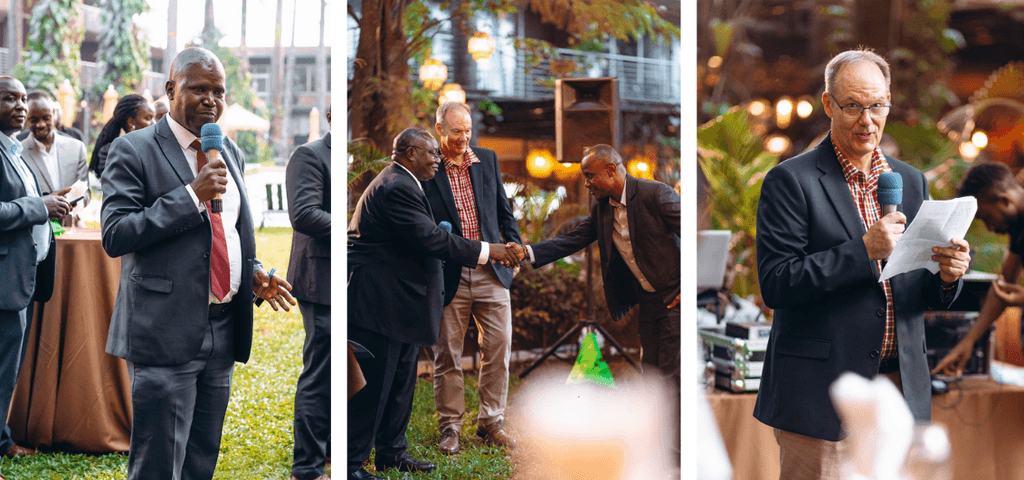
The anniversary was celebrated with a reception alongside government officials and media. Representatives from Uganda's Ministry of Trade, Industry and Cooperatives described the country's BDS sector as moving from "an unregulated promise" to "an institution taking shape", and commended AMEA for building the business support ecosystem through collaborative action.
That story is part of a wider one. AMEA began by assembling a peer-reviewed Toolbox of proven approaches, including the IFC Agribusiness Leadership Programme, which has supported more than 1.7 million farmers. AMEA also spent more than six years supporting the development of ISO 18716, backed by countries representing over one third of the world's population.
The next decade must be about putting these foundations to work at greater scale: better quality and more sustainable BDS, stronger Local Networks, and agri-SMEs and farmer organisations that can access the support they need to grow, compete and create value for farmers.
Thank you to our Ugandan hosts, members, partners, speakers and Board members for making this Convening possible. Next year, we expect to gather in West Africa.